⏱️ Estimated Read Time: 8 min
Key Takeaways & Highlights:
🎰 Discover the evolution of free-to-play slot mechanics.
🤝 Learn how social features are redefining the modern casino experience.
📈 Understanding the growth of virtual gaming communities.
Social Casino Games vs. Traditional Arcade Games: Clear Differences and Player Benefits
Gaming today reaches far beyond the arcade cabinet or the casino floor. Social casino titles and classic arcade games each offer distinct thrills — one leans on virtual currency and social play, the other on skill, reflexes, and nostalgia. This page breaks down how they work, what players enjoy about each, and how Crestline Game Limited’s POLYCASINO brings social casino features to life. Read on to find which style fits your play habits and why.
What Are Social Casino Games? Virtual Currency, Social Features, and Instant Fun
Social casino games recreate casino-style play — slots, roulette, and table-style games — but without real-money gambling. Instead, they use virtual coins or credits that you can earn through gameplay or buy as extras. The real draw is the social layer: leaderboards, gifts, chat, and events make these games a shared pastime as much as a solo diversion.
As social casino titles have grown, they’ve opened new opportunities — and new questions — about how game design and data shape player habits.
Social Casino Gaming: Mechanics, Engagement & Monetization
Since about 2007, social casino games have exploded across social platforms and mobile apps. These titles blur familiar lines around gambling and risk. Because they’re easy to access and driven by modern game mechanics and rich player data, they present fresh challenges for public-health experts and regulators — especially around how personalized experiences are engineered to boost engagement and revenue.
Gambling on big data: Designing risk in social casino games, J Reynolds, 2019
How Social Casino Games Use Virtual Currency to Keep Play Fun
Virtual currency is the engine of social casino play. You wager virtual coins to spin and play, and you can replenish your balance via daily rewards, challenges, or purchase packs. That loop keeps sessions light and low-risk while giving players incentives to return and engage with new content and promotions.
Which Social Features Make These Games Sticky?
Social features are a core part of the experience. Things like leaderboards, in-game chat, friend gifting, and shared events turn single-player spins into collective moments. Those mechanics boost enjoyment and retention by making wins sharable and play a social activity.
What Defines Traditional Arcade Games? Skill, Nostalgia, and Local Community
Traditional arcade games center on skill: precision, timing, pattern recognition, and reaction speed. They often carry nostalgic weight — memories of arcades, high-score bragging, and the communal energy of an in-person game floor. Arcades historically bring people together physically to compete, spectate, and celebrate skillful play.
Why Skill-Based Play Sets Arcades Apart
Arcade titles reward practice and mastery. Winning isn’t about buying more plays — it’s about improving timing, strategy, and reflexes. That clear link between effort and outcome gives strong satisfaction when players hit personal bests or top local leaderboards.
How Nostalgia Shapes the Arcade Experience
For many players, arcade games are emotional touchstones. Familiar sounds, cabinet art, and the thrill of climbing a scoreboard reconnect players with earlier gaming memories. That nostalgia is a big part of why arcade-style games remain appealing, even in digital formats.
Key Differences Between Social Casino and Traditional Arcade Games
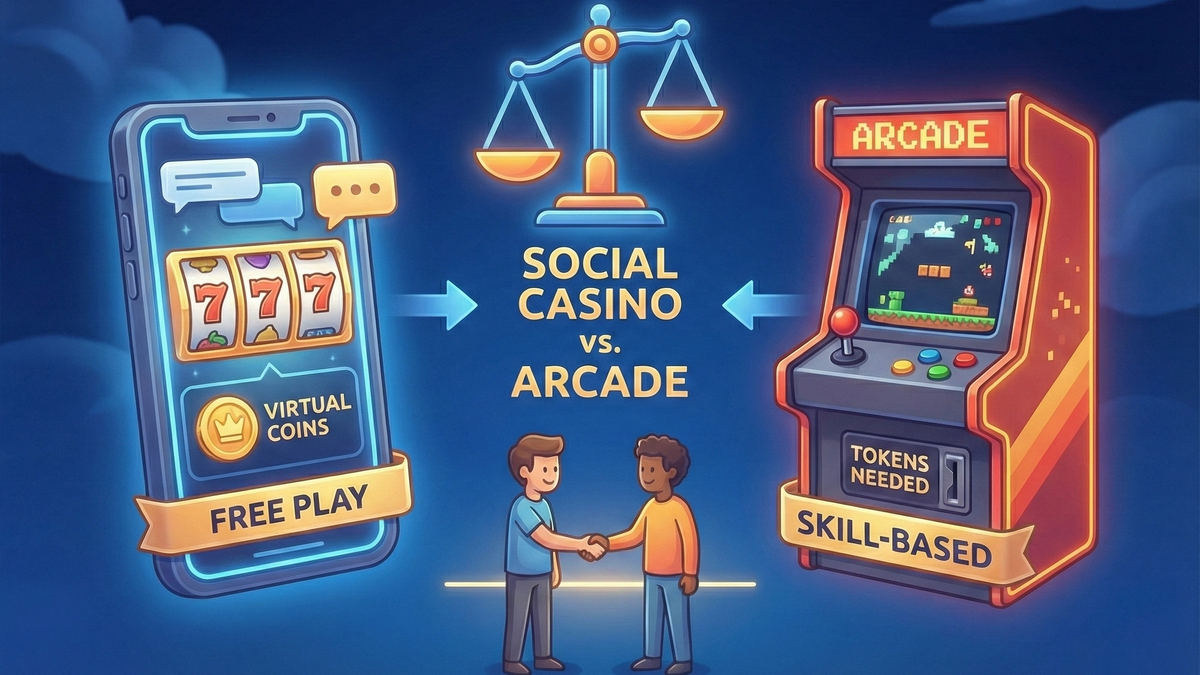
Both formats deliver fun, but they diverge in monetization, risk model, and how easy they are to access. Understanding those differences helps players choose the experience that matches their goals — casual social play or competitive, skill-driven challenge.
How Monetization Models Compare
Social casino games usually follow a freemium model: free to start, with optional in-app purchases for extra virtual currency or boosts. Traditional arcade play often uses a pay-per-play approach — tokens, coins, or direct payments — which ties each session to a clear cost. That distinction shapes both short-term spending and long-term engagement strategies.
Financial Risk and Accessibility: What to Expect
Social casino play minimizes direct gambling risk because bets use virtual currency, but buying virtual currency with real money introduces a spending element. This lowers the barrier to entry and attracts casual players. Arcade games, by contrast, typically require real-money plays up front, which can be a cost barrier but also keeps play strictly transactional.
Benefits of Social Casino Games: Free Play, Low Risk, and Social Connection
Social casino titles deliver easy, low-pressure entertainment with a social backbone. Players enjoy free daily plays, community features, and event-driven content that keeps things fresh without the stakes of real-money gambling.
How Daily Coins and VIP Perks Boost the Experience
Daily coin rewards and VIP programs give players reliable reasons to come back. Daily bonuses, special events, and VIP-only perks (like faster support or exclusive promotions) create habitual play and a stronger sense of belonging for regulars.
Why Responsible Social Gaming Matters
Even without real-money wagers, responsible design is important. Many platforms include spending limits, clear purchase controls, and resources for players who need help. Those features protect players and keep the experience enjoyable long term.
How POLYCASINO Delivers a Polished Social Casino Experience
POLYCASINO, from Crestline Game Limited, blends a wide game selection with round-the-clock support and community-driven features. That mix is designed to make play feel welcoming, reliable, and social — whether you’re a casual spinner or a dedicated VIP.
What Games and Providers Power POLYCASINO?
POLYCASINO offers a broad slate of slots, table games, and casino-style entertainment sourced from multiple providers. The result: polished visuals, diverse mechanics, and fresh releases that suit many player tastes — from casual sessions to longer play sessions.
How 24/7 Support and a VIP Club Improve Engagement
Having help available 24 hours and a VIP program with tailored benefits boosts player confidence and loyalty. Quick support and VIP rewards — like exclusive promos and priority service — make players feel valued and more likely to stick around.
Different monetization strategies and financial risks associated with social casino and traditional arcade games can be compared in the following table:
Game Type
Monetization Model
Financial Risk
Accessibility
Social Casino Games
Freemium (free to play with optional in-app purchases)
Low to Moderate (virtual currency; optional real-money purchases)
High (easy access and low direct gambling risk)
Traditional Arcade Games
Pay-per-play (tokens, coins, or per-play fees)
Moderate (real-money cost per play)
Moderate (requires upfront payment)
This side-by-side shows how each approach affects cost, accessibility, and player experience — highlighting the flexibility of social casinos and the skill-driven clarity of traditional arcades.
Frequently Asked Questions
What psychological effects can social casino games have?
Social casino play can be fun and rewarding without the stakes of real gambling — it can boost enjoyment and give a sense of achievement. At the same time, mechanics designed to encourage repeat play can sometimes lead to compulsive patterns for a minority of players. Being aware of your play habits and using built-in controls helps keep gaming healthy and enjoyable.
How do social casino players differ from traditional gamblers?
Social casino audiences are typically broader and younger, drawing casual players who enjoy low-risk entertainment and social features. Traditional gambling tends to attract players seeking real-money stakes and can skew older. The motivations and engagement patterns between the two groups often differ as a result.
Are there age restrictions for social casino games?
Yes. Even though social casino games use virtual currency, platforms commonly enforce age limits — typically 18+ — to align with regulations and to protect younger users from exposure to gambling-like mechanics.
What role does community play in social casino games?
Community features are central: leaderboards, chat, gifting, and shared events create social ties and shared goals. Those interactions make play more engaging and often turn casual sessions into recurring social routines.
How do developers keep social casino games fair?
Fairness is maintained through measures like random number generators (RNGs), third-party audits, and transparent rules about odds and payouts. These practices help ensure outcomes are unpredictable and trustworthy for players.
Could playing social casino games lead to real-money gambling?
There’s a potential pathway for a small number of players: the excitement of virtual wins can sometimes translate into interest in real-money gambling. Players should monitor their behavior, use limits where available, and seek help if they notice spending or play patterns changing in ways that concern them.