⏱️ Estimated Read Time: 12 min
Key Takeaways & Highlights:
🎰 Discover the evolution of free-to-play slot mechanics.
🤝 Learn how social features are redefining the modern casino experience.
📈 Understanding the growth of virtual gaming communities.
Social Casino vs. Real-Money Gambling: Clear Differences for Savvy Players
Gambling comes in different forms — from social, app-based play to regulated real-money wagering. Each option delivers a different experience, risk profile, and legal picture. This guide breaks down how social casinos and real-money gambling work, what risks to watch for, and how responsible play looks in both spaces. Read on to decide which fits your entertainment style.
Social casino gaming has grown fast and become a major part of online entertainment — but the legal rules around it are still catching up.
Social Casino Gaming: Scale, Reach, and the Legal Gray Area
Social games — and social casino games in particular — grew enormously in the 2010s. In 2012 roughly 800 million people (about 12% of the world’s population at the time) played social games at least once a month, with projections suggesting that number could rise to around 1.5 billion by 2015. By contrast, only about 50 million people participated on real-money online gambling sites in 2012. Despite that rapid expansion, the legal questions around social casino gaming have only recently begun to surface in court. This discussion defines "social" and "social casino" gaming, looks at how other jurisdictions treat these products, reviews early U.S. litigation, and considers public-policy options going forward.
Social Casino Gaming: Legal (R) Evolution, 2016
What Is a Social Casino and How Does It Use Virtual Currency?
A social casino is a website or app that mimics casino games but uses virtual currency instead of cash. Players spin slots, play poker, or try blackjack with in-game currency — often called Gold Coins — so there’s no direct risk of losing real money. These platforms prioritize entertainment and social features, like leaderboards and friend interactions, to keep gameplay fun and community-driven.
Although social casinos feel low-risk, research points to a possible link between simulated gambling and later real-money gambling, especially among younger players.
Simulated Gambling: Exposure, Behavior, and Potential Risk
Simulated gambling is widely available across apps and social platforms and has become a common pastime for many young users. But we still know little about how ongoing exposure to these products affects attitudes toward and participation in real-money gambling. A review of the literature finds that youth who play simulated gambling games are more likely to show pro-gambling attitudes and a greater propensity for monetary gambling later on. Features like virtual currency, timed in-game events, and gambling-themed content can skew perceptions about losses and rewards, potentially increasing risk rather than serving as a harmless alternative to cash gambling.
An exploration of how simulated gambling games may promote gambling with money, T Armstrong, 2018
How Do Social Casinos Like POLYCASINO Operate Without Real Money?
Platforms like POLYCASINO let players play casino-style games using virtual currency. You can earn Gold Coins through gameplay, receive daily bonuses, or buy additional coins to speed things up. Because play happens with in-game currency rather than cash, the focus stays on entertainment and social connection — players compete, chat, and share wins without the same financial pressure as real-money gambling.
What Are the Benefits of Playing Free Casino Games in Social Casinos?
Playing free casino games in social casinos gives you several clear advantages:
- Risk-Free Entertainment: Enjoy the excitement of casino games without risking your wallet.
- Social Interaction: Connect with friends, join leaderboards, and share your progress—gaming built around community.
- Wide Game Selection: Try many game types—from slots to table games—without committing any cash.
These perks make social casinos a great choice if you want casino-style fun in a relaxed, social setting.
What Defines Real Money Gambling and Its Associated Risks?
Real-money gambling means betting actual currency on games of chance or skill, with money at stake and cash payouts possible. This activity is regulated and usually requires licensing, age checks, and compliance with local law. While real-money play can offer bigger wins, it also carries real financial risk and a higher potential for problem gambling.
What Financial and Addiction Risks Are Linked to Real Money Gambling?
Real-money gambling brings several notable risks:
- Financial Loss: Players can lose substantial sums, which may lead to financial strain.
- Addiction Potential: For some, the thrill of winning can become compulsive, creating gambling problems.
- Emotional Impact: Heavy losses can cause stress, anxiety, and other negative effects on mental health.
Being aware of these risks is important before you choose to play with real money.
How Is Real Money Gambling Regulated Across Different States?
Regulation for real-money gambling varies widely by state. Some states permit online gambling under strict licensing and consumer-protection rules; others ban or limit it. Rules usually cover who can operate, minimum age, and what player protections are required. If you’re considering real-money play, check your state’s laws so you know what’s allowed and how you’re protected.
How Do Social Casinos and Real Money Gambling Differ in Currency and Payouts?
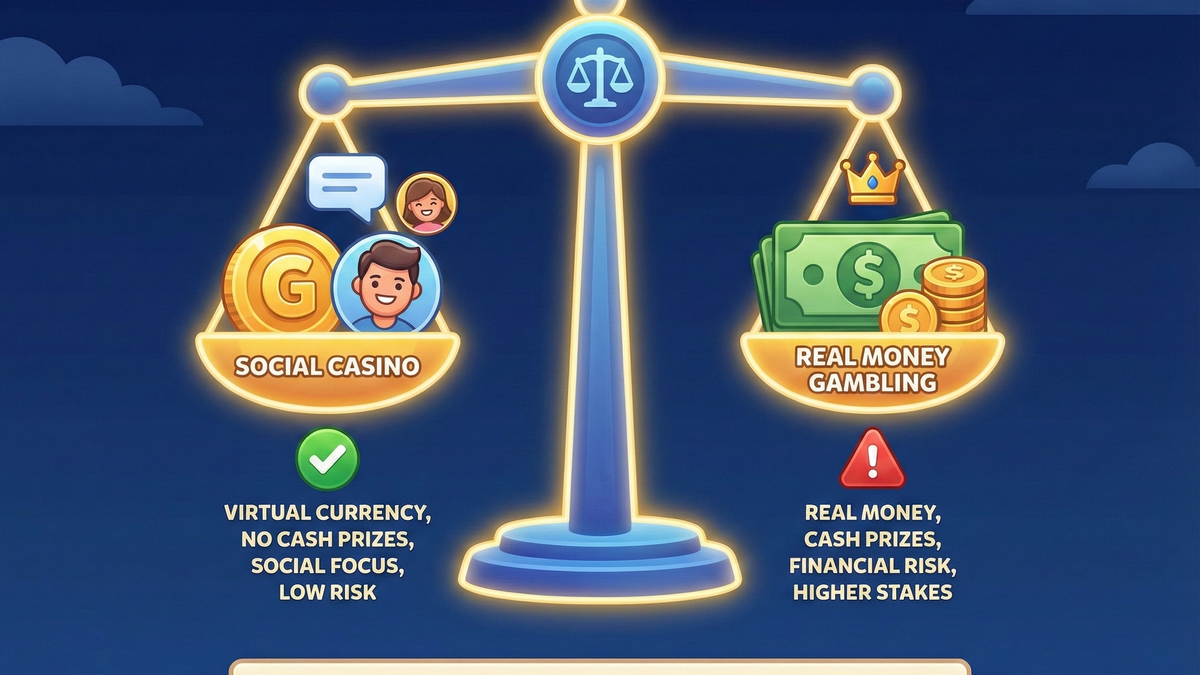
The biggest practical difference is the money involved: social casinos use virtual currency for play, while real-money gambling uses cash and offers cash payouts.
What Is Virtual Currency and Why Can't It Be Redeemed for Cash?
Virtual currency (like Gold Coins) exists only inside the game. It’s used to place bets and unlock features but isn’t convertible to real-world money. That in-game-only design is a core reason social casinos aren’t treated the same as real-money gambling platforms.
Can Players Win Real Money in Social Casinos?
No — social casino wins are limited to in-game rewards and bonuses. While you can collect virtual coins and prizes, those rewards aren’t cashable. That’s part of what keeps social play low-risk compared with wagering real money.
What Is the Legal Status of Social Casinos Compared to Real Money Gambling?
Social casinos’ legality depends on how they’re built and where they operate. Many use sweepstakes or promotional models to offer gameplay without direct cash wagering, which keeps them outside the stricter rules that apply to real-money gambling. Still, the legal landscape varies by state and by implementation, so the line isn’t always straightforward.
Are Social Casinos Legal in the US and How Does the Sweepstakes Model Work?
In the U.S., many social casinos operate legally under a sweepstakes model. That typically means players can earn or receive virtual currency that can be used for gameplay, and in some setups those coins can enter sweepstakes or prize drawings. Because no direct cash wagering occurs, these products avoid some gambling regulations. However, state laws differ, and specific sweepstakes implementations can change the legal picture — so it's important to understand the rules where you live.
Even when sweepstakes models make social casinos legal, the industry remains largely unregulated — a point that raises ethical and public-health questions.
Social Casino Gaming: Industry Growth, Low Barriers, and Public-Health Questions
Since about 2007, social casino games have multiplied across social networks and mobile apps. Today the industry operates with few formal regulations and challenges traditional definitions of gambling and risk. For example, people as young as 13 can create social-media profiles and access many social casino games, creating low barriers to entry. That accessibility, combined with design choices and advanced data analytics used by developers, raises concerns for public-health and risk-regulation professionals about how these games may influence vulnerable users.
Gambling on big data: Designing risk in social casino games, J Reynolds, 2019
What State Regulations Apply to Real Money Online Casinos?
Real-money online casinos face strict state-level rules that usually include licensing, verified minimum ages, and required consumer protections. Regulators typically demand measures to promote safe play and to prevent underage gambling. If you play at a real-money site, choose licensed operators and review the state rules that apply to you.
How Do Responsible Gaming Practices Differ Between Social Casinos and Real Money Gambling?
Both kinds of platforms have a role in promoting healthy play, but the tools and intensity differ. Social casinos aim to keep play safe and fun, often with lighter guardrails. Real-money operators must offer stronger controls because financial harm is possible.
What Responsible Social Gaming Tools Does POLYCASINO Offer?
POLYCASINO supports responsible play by offering features to help you manage your time and spending. These include options to set play limits, reminders and cool-downs, educational resources about healthy gaming habits, and easy ways to pause or step away from the app. Our goal is to keep your experience entertaining and under your control.
How Do Real Money Casinos Implement Responsible Gambling Measures?
Real-money casinos typically provide more formal protections: self-exclusion programs, deposit and loss limits, reality checks, and links to professional help for gambling problems. These measures are often required by regulators to reduce harm and support players who need it.
Why Choose POLYCASINO’s Social Casino Over Real Money Gambling?
POLYCASINO is built for players who want casino-style thrills without the financial risk. If you want social interaction, variety, and casual play — with tools to keep things balanced — a social casino can be a better fit than real-money gambling.
What Unique Advantages Does POLYCASINO Provide for Social Casino Players?
- Free Daily Coin Prizes: Come back each day for bonus Gold Coins to keep playing without spending real cash.
- Community Engagement: Connect with friends, climb leaderboards, and share moments with other players.
- Variety of Games: A wide selection of slots and table games gives you fresh experiences every session.
How Can Players Get Started with Free Social Casino Games at POLYCASINO?
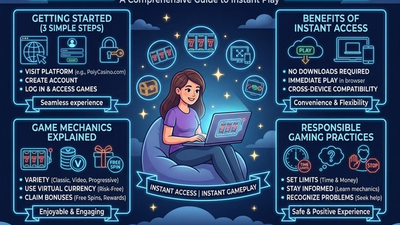
Getting started is quick and free. Sign up for an account, collect your starter Gold Coins, and jump into games right away. From there you can explore daily promotions, try new titles, and play with friends — all without risking real money.
Feature
Social Casino
Real Money Gambling
Currency
Virtual Currency (Gold Coins)
Real Money
Payouts
No Cash Prizes
Cash Prizes Available
Risk Level
Low (No Financial Loss)
High (Potential for Financial Loss)
Legal Status
Generally Legal (Sweepstakes Model, varies by state)
Varies by State
Responsible Gaming Tools
Community Features, Limit Settings
Self-Exclusion, Deposit Limits
This side-by-side shows the core differences and highlights why players looking for social, low-risk fun often choose platforms like POLYCASINO.
Frequently Asked Questions
What are the main differences in player demographics between social casinos and real money gambling?
Social casinos tend to draw younger, casual players who enjoy games and social features without financial stakes. Real-money gambling usually attracts an older audience more comfortable with financial risk and experienced in betting. These differences shape how platforms design games and market to players.
How do social casinos handle in-game purchases and monetization?
Most social casinos offer optional in-game purchases — for example, bundles of virtual currency or cosmetic items. These purchases speed up progress or add perks but aren't required to enjoy the games. Monetization helps platforms stay free to play while letting players choose how much to invest in their entertainment.
What impact do social casinos have on gambling behavior among young players?
Research suggests that early exposure to simulated gambling can normalize gambling behaviors for young people and may increase the chance they try real-money gambling later. That’s why parental guidance, age checks, and responsible-design practices are important to reduce potential harms.
Are there any age restrictions for playing social casino games?
Age rules vary by platform and region, but many social networks and apps allow accounts at age 13 and up. Individual platforms may set higher minimum ages and may use verification tools. Parents should check platform policies and monitor younger players to keep play age-appropriate.
What are the ethical concerns surrounding social casinos?
Key concerns include the lack of consistent regulation, the ease of access for younger users, and design practices that can encourage extended play or purchases. Critics worry these factors can blur lines between games and gambling, so transparency and responsible design are important industry issues.
How do social casinos promote responsible gaming among their users?
Social casinos use tools like gameplay limits, reminders, pause features, and educational resources to help players manage time and spending. By making these options visible and easy to use, platforms can support healthier habits and reduce the risk of problematic play.