
⏱️ Estimated Read Time: 10 min
Key Takeaways & Highlights:
🎰 Discover the evolution of free-to-play slot mechanics.
🤝 Learn how social features are redefining the modern casino experience.
📈 Understanding the growth of virtual gaming communities.
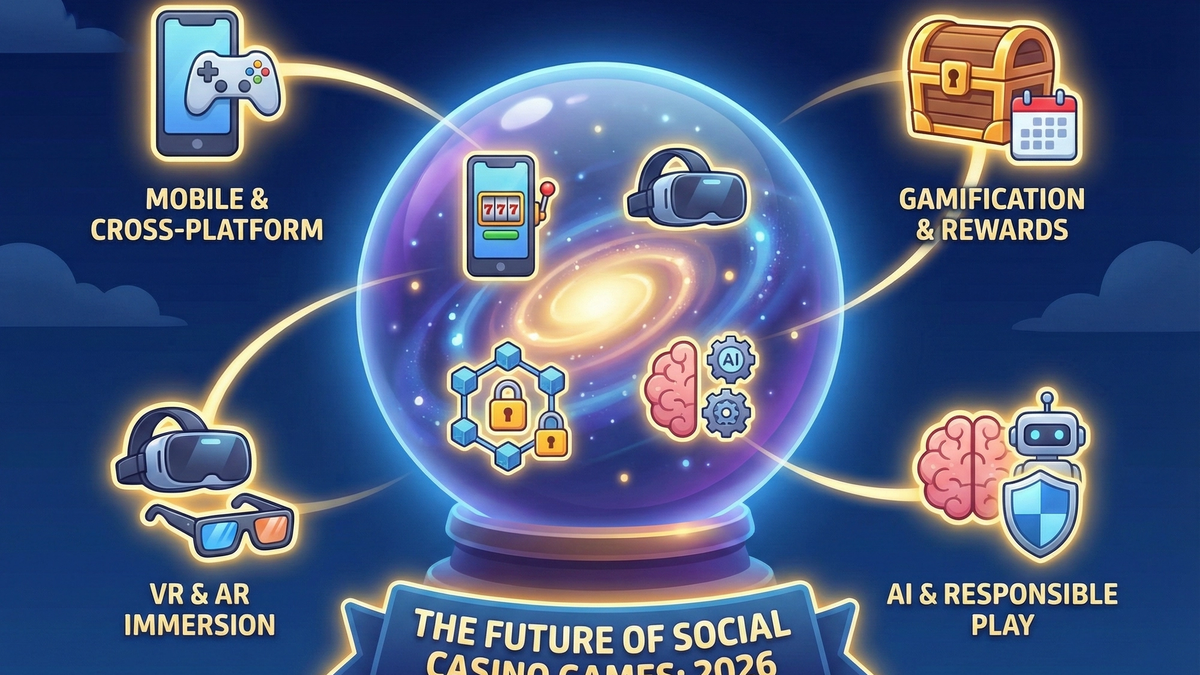
The Future of Social Casino Games — Trends, Tech, and Player Engagement for 2026
The world of social casino games is changing fast. New tech, shifting player expectations, and smarter design are pushing the category toward richer, more social experiences. In this piece we map the trends that matter — from mobile-first play and gamification to VR, AR, AI and blockchain — and show how teams like POLYCASINO are adapting to stay ahead. Expect practical examples, evidence-backed insights, and a clear view of what players will want in 2026.
What Are the Key Social Casino Game Trends Shaping 2026?
Several clear currents are reshaping social casino design and engagement. The biggest are mobile growth, deeper gamification, and the adoption of advanced tech such as AI and immersive reality. Together these trends increase player satisfaction and improve retention when implemented thoughtfully.
How Is Mobile Gaming Driving Social Casino Growth?
Mobile devices are the primary access point for most social casino players. With smartphone reach rising, games are available anytime, anywhere — and that convenience matters. Industry numbers put mobile at roughly 55% of overall gaming market share, a p that continues to climb. Titles like social slots and progressive jackpot games see higher session counts and stronger retention on mobile, and ongoing platform improvements will keep expanding what players expect from on-the-go experiences.
Why Is Gamification Essential for Player Retention?
Gamification is one of the simplest, most effective levers for keeping players engaged. Reward loops, daily incentives, leaderboards and achievement systems give players reasons to come back. Successful social casino programs layer loyalty clubs, limited-time events and social competitions to create a sense of community and momentum. As competition intensifies, clever gamification — not gimmicks — will be the difference-maker.
How Will Virtual Reality and Augmented Reality Transform Social Casino Experiences?
VR and AR unlock experiences that standard screens can’t match: presence, shared space and new forms of interaction. These tools let designers build environments where players feel together rather than simply connected, and that changes how social casino games are experienced.
What Immersive Features Do VR Social Casino Games Offer?
VR opens the door to realistic casino environments, live social interactions and gameplay that mirrors the energy of a physical venue. Expect richer visuals, spatial audio and new interaction patterns that make social moments — conversations, reactions, near-misses — feel authentic. As hardware improves and experiences become more polished, VR can be a powerful retention and monetization channel.
Below is research that investigates how immersive VR environments affect player behavior and physiology.
Immersive VR in Social Casino Games: Player Behavior
This study used immersive virtual reality (VR) to examine how near-miss events change physiological arousal and gambling behavior. Sixty adult participants without a history of problem gambling were placed in a VR casino-bar and played a self‑selected slot machine while researchers recorded real-time heart rate (HR) data during immersion.
A psychophysiological and behavioural study of slot machine near-misses using immersive virtual reality, LM Greenwood, 2019
How Does AR Blend Real and Virtual Elements in Social Casinos?
AR overlays digital game elements onto the player’s real world, which creates playful, context-aware experiences. Examples include motion-responsive slot visuals, pop-up social challenges in shared spaces, and AR-driven events that encourage real-world meetups. As AR tools mature, they’ll offer fresh ways to connect players and extend the lifecycle of live promotions.
In What Ways Is Artificial Intelligence Innovating Social Casino Platforms?
AI is already central to how social casinos learn about players and scale personalized experiences. From recommendations and chat support to fraud detection, machine learning shapes both the customer journey and operational security.
At the same time, relying on big data and AI for engagement raises ethical questions worth addressing.
Social Casino Gaming Trends: Big Data & Player Engagement
Since 2007, new gambling-like opportunities on social platforms and mobile apps have multiplied. This work highlights ethical and risk concerns around game mechanics and the use of big data to personalise gameplay with the goal of optimising engagement and monetisation.
Gambling on big data: Designing risk in social casino games, J Reynolds, 2019
How Does AI Personalize Player Experiences?
AI models look at play patterns to surface the right games, offers and in‑game prompts for each player. That can mean more relevant recommendations, better-timed rewards, and chatbots that solve problems instantly. When used responsibly, personalization increases satisfaction and loyalty because players feel understood rather than manipulated.
Research supports AI and big data as tools to tailor promotions and product experiences in real time.
AI & Big Data for Personalized Social Casino Experiences
AI and Big Data enable real-time analysis of player behaviour, allowing operators to serve tailored promotions, personalised recommendations, and proactive support — creating highly customised gaming experiences that drive retention.
Unlocking Customer Value in Casinos: Big Data and AI for Tailored Experiences and Increased Retention, 2025
What Role Does AI Play in Security and Fraud Detection?
Beyond personalization, AI strengthens platform safety. Machine learning flags anomalous transactions and play patterns, helping detect fraud or cheating earlier. That proactive monitoring protects players and preserves fairness — both crucial for long-term trust and the health of the ecosystem.
What Impact Will Blockchain Have on the Future of Social Casino Gaming?
Blockchain can improve transparency and ownership models within social casinos. By making records auditable and assets transferable, distributed ledgers introduce new trust and commerce opportunities.
How Can Blockchain Enhance Transparency and Security?
Immutable ledgers give players a verifiable record of transactions and game outcomes, which supports claims of fairness and protects payouts. Strong cryptographic practices also reduce risks around data and payments. As operators adopt blockchain selectively, these benefits can raise player confidence.
What Are the Opportunities for Digital Ownership and NFTs?
Blockchain enables true digital ownership — unique skins, collectibles or avatars that players can buy, sell or trade. NFTs create secondary marketplaces and new ways to reward engagement, adding both player value and alternative revenue streams for creators who integrate them thoughtfully.
How Are Mobile-First Designs and Cross-Platform Features Evolving Social Casinos?
Designing for mobile first and ensuring smooth cross-platform play are table stakes for modern social casinos. Players expect consistent, enjoyable sessions whether they’re on a phone, tablet or desktop.
Why Is Mobile Optimization Critical for Social Casino Success?
Because most sessions start on mobile, responsive interfaces and snappy performance are essential. Developers focus on intuitive navigation, fast load times and touch-friendly interactions so players can jump in and stay. Prioritising mobile experience translates directly into higher engagement and retention.
How Does Cross-Platform Play Enhance Social Interaction?
Cross-platform functionality keeps social connections intact across devices, so friends can play together no matter how they sign in. That continuity fuels community features, competition and sharing — all of which increase lifetime value and player satisfaction.
What Responsible Gaming Innovations Will Shape Social Casino Practices?
Responsible gaming is becoming central to product strategy. New tools and design standards help players control their behaviour while keeping entertainment healthy and sustainable.
How Are Future Technologies Supporting Player Well-Being?
Technologies such as self-exclusion controls, spending caps, session reminders and AI-driven risk detection give operators practical ways to support players. When combined with clear messaging and easy access to help, these tools make platforms safer and more trustworthy.
What Ethical Practices Are Emerging in Social Casino Design?
Designers are moving away from manipulative patterns and toward transparent, player-first mechanics. That means fair reward pacing, clear monetisation signals and proactive safeguards for vulnerable users. Operators who prioritise ethics will build stronger, longer-lasting player relationships.
Trend
Description
Impact
Mobile Gaming
Broader access and higher engagement through smartphones
High
Gamification
Stronger retention via rewards, challenges and events
High
AI Integration
Personalised experiences plus enhanced security
Medium
Blockchain Adoption
Greater transparency and new digital ownership models
High
The trends above show a clear direction: more immersive, more social, and more responsible play. Teams that combine smart design with ethical use of technology will create the most meaningful player experiences in 2026 and beyond.
Frequently Asked Questions
What are the potential risks associated with social casino games?
Social casino games are made for entertainment, but they can carry risks if play becomes excessive. Financial strain and compulsive behaviors are potential concerns for some users. That’s why responsible features — spending limits, self-exclusion and clear messaging — are increasingly standard tools to help players stay in control.
How do social casino games differ from traditional gambling?
The main difference is the monetisation model. Traditional gambling involves real‑money bets, while social casinos usually rely on virtual currency and in‑app purchases. Gameplay can mimic casino mechanics, but the financial exposure is typically lower — although similar psychological hooks can still apply.
What role do social features play in social casino games?
Social features are core to the category. Leaderboards, chat, shared events and gifting create community and friendly competition — all of which increase retention and invite organic growth when players bring friends into the game.
How is player data used in social casino games?
Player data helps tailor experiences: recommending games, timing offers and improving support. Used responsibly, it creates relevance and convenience. Operators must balance personalization with strong privacy and security practices to maintain player trust.
What innovations are expected in social casino game design?
Expect richer interactivity and immersion: AR and VR experiences, smarter AI-driven personalization, and tighter social integration. These innovations will make games feel more like shared entertainment than solitary sessions.
How can players ensure responsible gaming in social casinos?
Players should set time and spending limits, use built-in controls like self‑exclusion, and take regular breaks. If gaming ever feels like a problem, reaching out to the platform’s support or responsible gaming resources is an important step.